

Insights
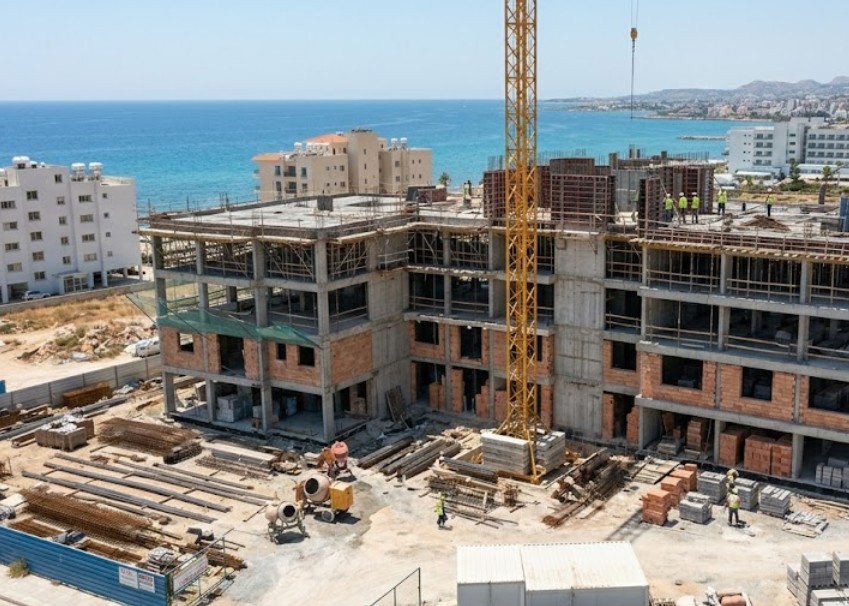
Why Noise Complaints in Cypriot Apartments Are a Design Problem, Not a Construction One
Hollow brick walls and polystyrene insulation are standard in Cypriot residential construction. Neither provides adequate sound insulation. Here is what architects and developers need to know before the structure goes up.
Noise complaints between residents are one of the most frequent after-sales issues in Cypriot residential developments. They generate disputes, damage reputations and in some cases lead to legal action. In the vast majority of cases they are also entirely predictable from the construction method, and entirely preventable with the right decisions at design stage.
Two assumptions embedded in standard Cypriot construction practice contribute significantly to this problem. The first is that hollow clay brick is an adequate separating element between apartments. The second is that polystyrene insulation in walls provides acoustic protection alongside thermal protection. Neither is true, and both are worth addressing directly.
The Hollow Brick Problem
The hollow clay brick is the default wall construction material in Cyprus. It is fast to build with, widely available, and performs adequately for its primary structural and thermal partition purposes. For sound insulation between residential units it is one of the weakest options available. Hollow clay bricks derive much of their thermal performance from the air pockets within them and those same air pockets make them poor at blocking sound. The low mass and discontinuous internal structure of a hollow brick wall means airborne noise, voices, music and television, passes through with relatively little resistance compared to a solid dense masonry wall of equivalent thickness.
In many Cypriot apartment buildings the separating wall between two units is a hollow brick partition rather than a structural concrete element. The wall is plastered and finished to a high standard. Its acoustic performance is significantly below what a resident would reasonably expect from a wall of that apparent solidity. This gap between perceived and actual performance is where most noise complaints originate.
The solution is straightforward at design stage. Specifying solid dense block masonry or reinforced concrete as the separating element between units rather than hollow brick delivers significantly better airborne sound insulation without a prohibitive cost premium. The decision needs to be made before the structural drawings are finalised, not after the first complaints arrive.
The Polystyrene Misconception
Polystyrene insulation boards are standard in Cypriot external wall construction and serve a genuine purpose. In a climate where thermal performance matters, polystyrene is an effective and appropriate material. What it does not do is provide meaningful sound insulation, and the assumption that it does is one of the most persistent misconceptions in the local construction market. Polystyrene is a lightweight, low density material with an acoustic absorption coefficient close to zero and insufficient mass to provide meaningful airborne sound reduction. A wall with polystyrene thermal insulation and a wall without it will perform almost identically against noise transmission.
This matters for architects and developers because it means that a wall specification justified on thermal grounds provides no acoustic protection that can be relied upon. If acoustic performance is a requirement, it needs to be addressed separately and deliberately, not assumed to follow from the thermal specification.
What Actually Determines Acoustic Performance
Sound insulation between apartments depends primarily on three things. The mass and density of the separating element, the continuity of that element without gaps or weak points, and the control of flanking transmission through the surrounding structure. Mass matters because heavier denser materials require more energy to set into vibration. A solid reinforced concrete wall performs significantly better than a hollow brick wall of the same thickness for this reason. Where concrete forms the separating element between units, airborne sound insulation is generally adequate as a starting point. Where hollow brick is specified, it rarely is.
Continuity matters because even a small gap or penetration in an otherwise adequate wall can dramatically reduce its acoustic performance. Service penetrations, back-to-back electrical boxes and poorly sealed junctions are common weak points in Cypriot construction that allow sound to bypass the wall entirely. These are detailing issues that cost almost nothing to address correctly during construction and a significant amount to fix afterwards.
Flanking transmission matters because sound does not only travel through the separating wall. It also travels around it via the floor slab, ceiling and structural connections. In a rigidly connected concrete frame, the continuous structure carries vibration between units regardless of what the separating wall is doing. Impact noise from footsteps above is the most common complaint in Cypriot apartments and it travels almost entirely through the slab rather than through any wall. A floating floor system with a resilient layer is the standard solution and it needs to be incorporated into the floor build-up at construction stage.
The Design Stage Argument
Every one of the issues described above is significantly easier and cheaper to address during design and construction than after residents have moved in. Changing a wall specification from hollow brick to dense block on a drawing costs nothing. Retrofitting additional lining to a completed separating wall is disruptive, expensive and only partially effective. Incorporating a resilient layer in a floor build-up adds modest cost to the construction programme. Addressing impact noise complaints in an occupied building means lifting finishes, disrupting residents and significant remediation cost.
The acoustic performance of a residential development is part of its quality and increasingly part of its value. Buyers in Cyprus are becoming more informed and noise complaints are becoming more visible as a reputational issue for developers. Addressing acoustic design seriously at the right stage of a project is both the technically correct approach and the commercially sensible one.
If you are developing or designing a residential project in Cyprus and want to address acoustic performance from the outset, get in touch.
Ελληνική Περίληψη
Τα παράπονα για θόρυβο σε κυπριακές πολυκατοικίες οφείλονται συχνά σε δύο κοινές παρεξηγήσεις. Πρώτον, ότι οι κούφιες πλινθοδομές προσφέρουν επαρκή ηχομόνωση μεταξύ διαμερισμάτων. Δεύτερον, ότι η θερμομόνωση με πολυστυρένιο παρέχει και ηχοπροστασία. Κανένα από τα δύο δεν ισχύει. Η ηχομόνωση εξαρτάται από τη μάζα και την πυκνότητα των κατασκευαστικών στοιχείων και από τον έλεγχο της πλευρικής μετάδοσης. Αυτά αντιμετωπίζονται αποτελεσματικά μόνο στη φάση σχεδιασμού και με πολύ μικρότερο κόστος από οποιαδήποτε μεταγενέστερη παρέμβαση.
Connect
info@nodeacoustics.com
(+357) 99 718622
" width="89px"><path d="M 45.427 0 C 42.448 0 40.214 2.209 40.214 5.155 C 40.214 8.1 42.448 10.31 45.427 10.31 C 48.405 10.31 50.64 8.1 50.64 5.155 C 50.64 2.209 48.405 0 45.427 0 Z M 21.969 6.628 C 9.681 6.628 0 16.569 0 28.351 C 0 40.134 10.053 50.075 21.969 50.075 C 33.884 50.075 43.937 40.134 43.937 28.351 C 43.937 16.569 34.256 6.628 21.969 6.628 Z M 21.969 42.343 C 14.149 42.343 7.819 36.084 7.819 28.351 C 7.819 20.619 14.149 14.36 21.969 14.36 C 29.788 14.36 36.118 20.619 36.118 28.351 C 36.118 36.084 29.788 42.343 21.969 42.343 Z" fill="rgb(153, 153, 153)" height="50.07531380753138px" id="VSj3XsHuK" transform="translate(22.698 16.216)" width="50.63951740598173px"/><path d="M 62.555 0 L 27.182 0 C 11.915 0 0 11.782 0 26.51 L 0 61.49 C 0 76.218 11.915 88 26.809 88 L 62.182 88 C 77.076 88 88.992 76.218 88.992 61.49 L 88.992 26.51 C 89.364 11.782 77.449 0 62.555 0 Z M 80.8 61.858 C 80.8 71.799 72.608 80.268 62.182 80.268 L 26.809 80.268 C 16.756 80.268 8.192 72.167 8.192 61.858 L 8.192 26.879 C 8.192 16.937 16.383 8.469 26.809 8.469 L 62.182 8.469 C 72.236 8.469 80.8 16.569 80.8 26.879 Z" fill="rgb(153, 153, 153)" height="88px" id="w6VARJ_5D" width="89px"/></g></svg>)
" width="78px"/><path d="M 19.5 24.375 L 19.5 9.75 C 19.5 4.365 15.135 0 9.75 0 C 4.365 0 0 4.365 0 9.75" fill="transparent" height="24.375px" id="bvurMyrXC" stroke-dasharray="" stroke-linecap="round" stroke-linejoin="round" stroke-width="8.73" stroke="rgb(153, 153, 153)" transform="translate(39 34.125)" width="19.500000000000142px"/></g></svg>)
Location
Limassol, Cyprus
Insights
Why Noise Complaints in Cypriot Apartments Are a Design Problem, Not a Construction One
Hollow brick walls and polystyrene insulation are standard in Cypriot residential construction. Neither provides adequate sound insulation. Here is what architects and developers need to know before the structure goes up.
Noise complaints between residents are one of the most frequent after-sales issues in Cypriot residential developments. They generate disputes, damage reputations and in some cases lead to legal action. In the vast majority of cases they are also entirely predictable from the construction method, and entirely preventable with the right decisions at design stage.
Two assumptions embedded in standard Cypriot construction practice contribute significantly to this problem. The first is that hollow clay brick is an adequate separating element between apartments. The second is that polystyrene insulation in walls provides acoustic protection alongside thermal protection. Neither is true, and both are worth addressing directly.
The Hollow Brick Problem
The hollow clay brick is the default wall construction material in Cyprus. It is fast to build with, widely available, and performs adequately for its primary structural and thermal partition purposes. For sound insulation between residential units it is one of the weakest options available. Hollow clay bricks derive much of their thermal performance from the air pockets within them and those same air pockets make them poor at blocking sound. The low mass and discontinuous internal structure of a hollow brick wall means airborne noise, voices, music and television, passes through with relatively little resistance compared to a solid dense masonry wall of equivalent thickness.
In many Cypriot apartment buildings the separating wall between two units is a hollow brick partition rather than a structural concrete element. The wall is plastered and finished to a high standard. Its acoustic performance is significantly below what a resident would reasonably expect from a wall of that apparent solidity. This gap between perceived and actual performance is where most noise complaints originate.
The solution is straightforward at design stage. Specifying solid dense block masonry or reinforced concrete as the separating element between units rather than hollow brick delivers significantly better airborne sound insulation without a prohibitive cost premium. The decision needs to be made before the structural drawings are finalised, not after the first complaints arrive.
The Polystyrene Misconception
Polystyrene insulation boards are standard in Cypriot external wall construction and serve a genuine purpose. In a climate where thermal performance matters, polystyrene is an effective and appropriate material. What it does not do is provide meaningful sound insulation, and the assumption that it does is one of the most persistent misconceptions in the local construction market. Polystyrene is a lightweight, low density material with an acoustic absorption coefficient close to zero and insufficient mass to provide meaningful airborne sound reduction. A wall with polystyrene thermal insulation and a wall without it will perform almost identically against noise transmission.
This matters for architects and developers because it means that a wall specification justified on thermal grounds provides no acoustic protection that can be relied upon. If acoustic performance is a requirement, it needs to be addressed separately and deliberately, not assumed to follow from the thermal specification.
What Actually Determines Acoustic Performance
Sound insulation between apartments depends primarily on three things. The mass and density of the separating element, the continuity of that element without gaps or weak points, and the control of flanking transmission through the surrounding structure. Mass matters because heavier denser materials require more energy to set into vibration. A solid reinforced concrete wall performs significantly better than a hollow brick wall of the same thickness for this reason. Where concrete forms the separating element between units, airborne sound insulation is generally adequate as a starting point. Where hollow brick is specified, it rarely is.
Continuity matters because even a small gap or penetration in an otherwise adequate wall can dramatically reduce its acoustic performance. Service penetrations, back-to-back electrical boxes and poorly sealed junctions are common weak points in Cypriot construction that allow sound to bypass the wall entirely. These are detailing issues that cost almost nothing to address correctly during construction and a significant amount to fix afterwards.
Flanking transmission matters because sound does not only travel through the separating wall. It also travels around it via the floor slab, ceiling and structural connections. In a rigidly connected concrete frame, the continuous structure carries vibration between units regardless of what the separating wall is doing. Impact noise from footsteps above is the most common complaint in Cypriot apartments and it travels almost entirely through the slab rather than through any wall. A floating floor system with a resilient layer is the standard solution and it needs to be incorporated into the floor build-up at construction stage.
The Design Stage Argument
Every one of the issues described above is significantly easier and cheaper to address during design and construction than after residents have moved in. Changing a wall specification from hollow brick to dense block on a drawing costs nothing. Retrofitting additional lining to a completed separating wall is disruptive, expensive and only partially effective. Incorporating a resilient layer in a floor build-up adds modest cost to the construction programme. Addressing impact noise complaints in an occupied building means lifting finishes, disrupting residents and significant remediation cost.
The acoustic performance of a residential development is part of its quality and increasingly part of its value. Buyers in Cyprus are becoming more informed and noise complaints are becoming more visible as a reputational issue for developers. Addressing acoustic design seriously at the right stage of a project is both the technically correct approach and the commercially sensible one.
If you are developing or designing a residential project in Cyprus and want to address acoustic performance from the outset, get in touch.
Ελληνική Περίληψη
Τα παράπονα για θόρυβο σε κυπριακές πολυκατοικίες οφείλονται συχνά σε δύο κοινές παρεξηγήσεις. Πρώτον, ότι οι κούφιες πλινθοδομές προσφέρουν επαρκή ηχομόνωση μεταξύ διαμερισμάτων. Δεύτερον, ότι η θερμομόνωση με πολυστυρένιο παρέχει και ηχοπροστασία. Κανένα από τα δύο δεν ισχύει. Η ηχομόνωση εξαρτάται από τη μάζα και την πυκνότητα των κατασκευαστικών στοιχείων και από τον έλεγχο της πλευρικής μετάδοσης. Αυτά αντιμετωπίζονται αποτελεσματικά μόνο στη φάση σχεδιασμού και με πολύ μικρότερο κόστος από οποιαδήποτε μεταγενέστερη παρέμβαση.
Connect
info@nodeacoustics.com
(+357) 99 718622
Location
Limassol, Cyprus